Flooring Installation: DIY vs Hiring a Pro
Should you install flooring yourself or hire professionals? This detailed comparison examines costs, time, skill requirements, and results to help you make the right choice for your project.
Cost Comparison
The primary motivation for DIY installation is cost savings. Professional installation typically costs $2-10 per square foot depending on material complexity. For a 500 square foot room, labor costs range from $1,000-5,000. DIY installation eliminates this expense.
However, DIY isn't free. Tool rental costs $50-200 per day for specialized equipment like drum sanders, tile saws, or pneumatic nailers. Mistakes waste materials—cutting errors, damaged planks, or improper measurements can add 15-20% to material costs. First-time installers often underestimate time requirements, leading to extended tool rental periods.
Professional installers have tools, experience, and efficiency. They complete installations faster with less waste. They also provide warranties covering installation defects. Consider the total cost including your time value, tool rentals, potential mistakes, and lack of warranty when comparing DIY to professional installation.
Skill Requirements by Flooring Type
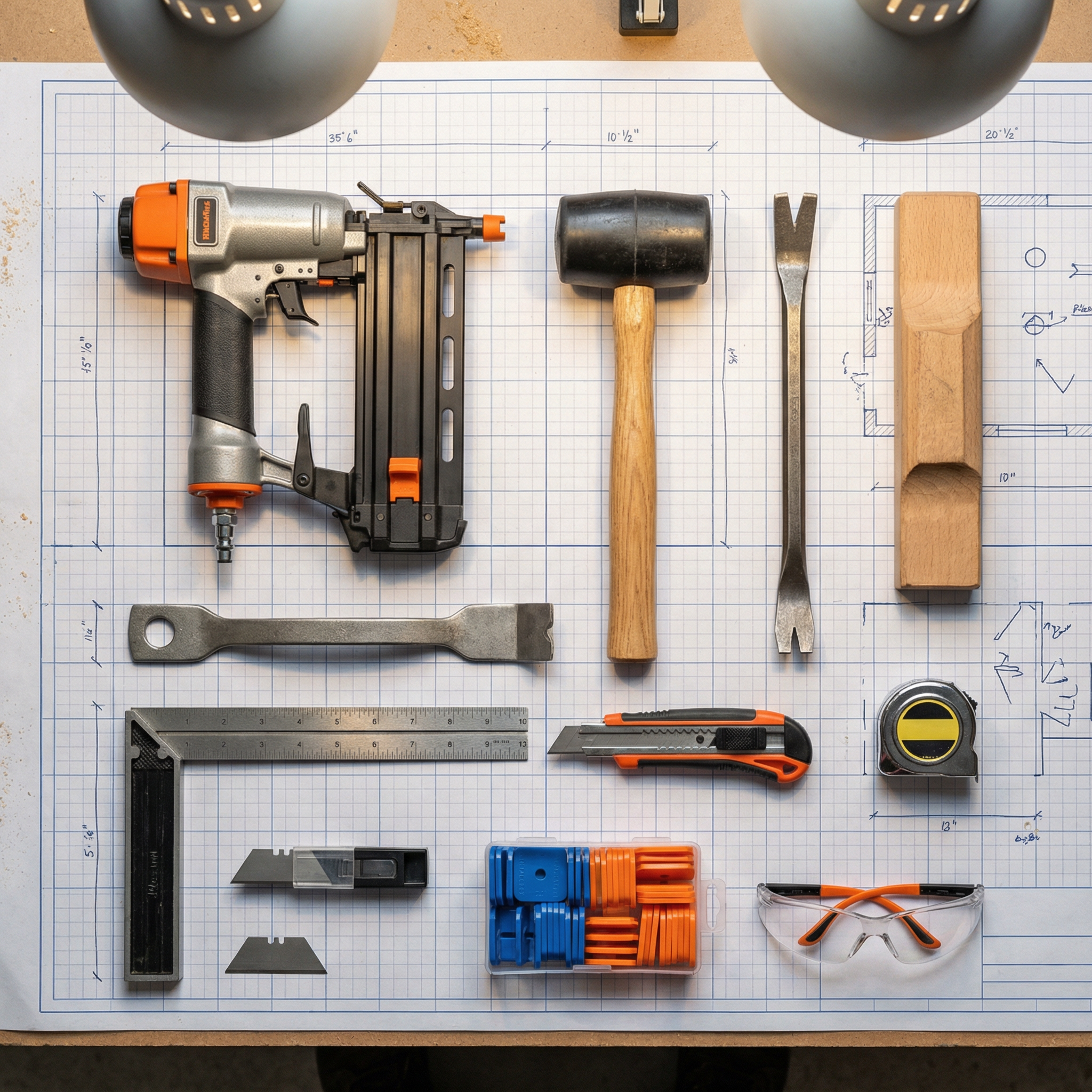
**Easy DIY Projects:** Floating floors (laminate, click-lock vinyl plank, engineered wood) are beginner-friendly. Click-lock systems require no adhesive or nails. Basic tools suffice: circular saw, tapping block, pull bar, and spacers. Most DIYers can achieve professional-looking results with careful work and patience.
**Moderate DIY Projects:** Glue-down vinyl, peel-and-stick tile, and carpet installation require more skill. Adhesive application, working within open time, and proper subfloor preparation are critical. Mistakes are harder to fix. Moderate DIY projects suit experienced DIYers comfortable with detailed work.
**Advanced Projects:** Solid hardwood installation, ceramic tile, and refinishing require professional-level skills and expensive tools. Hardwood installation demands precise nailer operation, understanding of wood movement, and finishing expertise. Tile requires perfect layout, proper mortar application, and grouting skills. These projects typically exceed DIY capabilities.
Time Investment
Professional installers complete projects quickly through experience and efficiency. A 500 square foot laminate installation takes professionals 1-2 days. The same project takes DIYers 3-5 days, often spread over multiple weekends.
Factor in learning time. First-time installers spend hours researching techniques, watching tutorials, and reading instructions. Mistakes require time to fix. Complex cuts and obstacles slow progress significantly.
Consider your schedule and tolerance for disruption. Living in a construction zone for weeks is stressful. Professionals minimize disruption by completing work quickly. DIY projects drag on, especially if you can only work weekends.
Quality of Results
Professional installers deliver consistent, high-quality results through experience and proper tools. They handle complex situations like uneven subfloors, difficult transitions, and obstacles efficiently. Professional work looks polished with tight seams, proper spacing, and flawless finishes.
DIY results vary widely. Careful, patient DIYers can achieve professional-looking results on simple projects. However, first-time installers often make visible mistakes: uneven grout lines, gaps between planks, poor stagger patterns, or wavy rows. Some mistakes are cosmetic; others affect performance and longevity.
Risk Factors
DIY installation risks include: - Voiding manufacturer warranties (many require professional installation) - Subfloor damage from improper installation - Moisture problems from skipped vapor barriers - Structural issues from improper fastening - Wasted materials from cutting errors - Personal injury from power tools
Professional installation includes liability insurance and workmanship warranties. If problems arise, professionals fix them at no additional cost. DIY mistakes are your responsibility and expense to correct.
When to DIY
Consider DIY installation when: - Installing floating floors (laminate, click-lock vinyl) - You have basic carpentry skills and tool experience - Project is small (single room) allowing practice without huge investment - You have flexible time and patience for learning - Budget is extremely tight and you can't afford professional installation - You enjoy hands-on projects and learning new skills
When to Hire Professionals
Hire professionals when: - Installing hardwood, tile, or other complex materials - Project is large (multiple rooms or whole house) - Subfloor requires significant preparation or repair - You lack time or patience for DIY - Material is expensive (mistakes waste costly materials) - Manufacturer warranty requires professional installation - You want guaranteed results and workmanship warranty - Physical limitations make installation difficult
Hybrid Approach
Consider a hybrid approach: handle demolition and subfloor preparation yourself, then hire professionals for installation. This saves money while ensuring quality installation. You can also install simple areas (closets, small bedrooms) yourself and hire professionals for complex spaces (kitchens, entryways).
Finding Quality Professionals
If hiring professionals, get multiple quotes from licensed, insured contractors. Check references and view previous work. Verify they're certified by manufacturers for specific products. Read contracts carefully, ensuring they include material specifications, timeline, payment schedule, and warranty terms.
Don't automatically choose the lowest bid. Extremely low quotes often indicate inexperience, corner-cutting, or hidden fees. Mid-range quotes from experienced professionals typically provide the best value.
Maximizing DIY Success
If you choose DIY: - Research thoroughly before starting - Watch multiple installation videos - Read manufacturer instructions completely - Invest in quality tools or rent professional equipment - Prepare subfloor meticulously - Take your time—rushing causes mistakes - Ask for help with heavy materials or complex cuts - Don't hesitate to call professionals if you encounter problems beyond your skill level
The Bottom Line
DIY installation can save significant money on simple projects if you have time, patience, and basic skills. However, professional installation provides guaranteed results, saves time, includes warranties, and prevents costly mistakes. For most homeowners, professional installation of complex materials (hardwood, tile) is worth the investment, while DIY installation of simple materials (laminate, vinyl plank) offers good value.
Honestly assess your skills, available time, and tolerance for imperfection. The right choice depends on your specific situation, project complexity, and priorities. There's no shame in hiring professionals—beautiful, properly installed floors are worth the investment.